Italia, mi fai eccitare! (Italy, you turn me on!)

IMG_0079

My unabashedly uncritical embrace of all things Italian, including cycling couture and wine, and despite the decades invested in my relationship with France, surprises even me.

31769950_10216243343346461_3176995722692132864_n
My first cycling jersey was also Italian

I should have known, from the moment several years ago when I slipped into my first pair of exquisitely tailored, expertly proportioned, and anatomically flattering cycling bib shorts from Milan, that my surrender to the bel paese was merely a matter of time. Talk about your lower body embrace. Oh mio Dio! It is no coincidence that my two bicycles’ most intimate parts–their saddles–are Italian made.

France might be my love, but Italy right now is my LOVER. I know because I put them both through the honeymoon test.

According to HelloGiggles, the honeymoon period tends to last anywhere between six months and a year. During that time, the relationship still feels fresh and exciting, and we’re constantly learning new things about each other and having first experiences together. But there comes a point when suddenly we’ve done all that stuff together already.

HelloGiggles lists 15 “relationship things” that happen once the honeymoon stage ends. Here are the ten that seem to apply to my situation.

1. You don’t need to be fancy 24/7

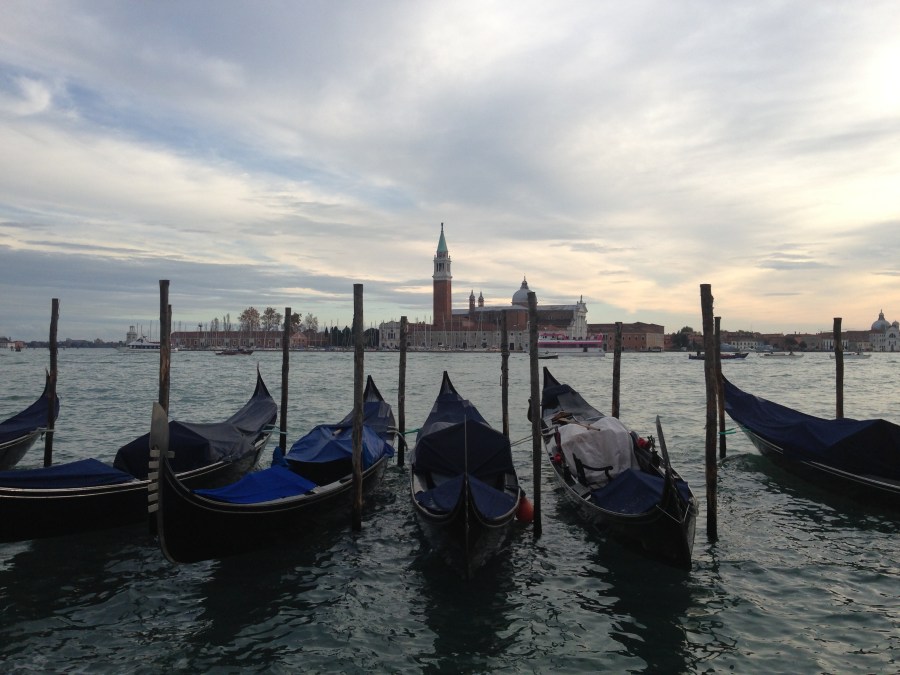
Italy—Honeymoon NOT OVER—We recently enjoyed a fabulous $200 bottle of Brunello de Montalcino at a delightful trattoria on Venice’s Riva degli Schiavoni with a commanding view of San Giorgio Maggiore.

France—Honeymoon OVER—After six months in Paris I was buying wine in plastic jugs. And drinking straight out of them. Alone.

2. You’re honest about restaurants you don’t want to go to and foods you have no interest in trying

Italy—NOT OVER—Even the pizza in the United Nations Food and Agriculture Organization headquarters cafeteria in Rome was delectable.

France—OVER—I had an underwhelming tagine at a Moroccan restaurant on the Rue des Dames in Paris’s Batignolles neighborhood. Except for that dinner at the Moroccan ambassador’s residence in Potomac, Maryland, a couple years ago, I haven’t had the food of this former French protectorate since.

3. The sweatpants come out and the makeup takes a hike

Italy—NOT OVER—I would have been lost on a recent trip to Italy without my Hugo Boss black velvet sport jacket.

France—OVER—On my last trip to France, I packed, maybe, two pairs of underwear. At most.

4. You don’t pretend everything is peachy all the time

Italy—NOT OVER—The $25 Bellini I had at Harry’s Bar in Venice had just the right amount of peach juice in it. To the guys at Harry’s: I love you guys!

France—OVER—With the help of a French contact, I took my Parisian landlord to court to get back my security deposit.

5. You can tell each other when you’re not feeling so great

Italy—NOT OVER—Two fabulous trips to Italy so far and no medical issues to report or talk through with the Italians.

France—OVER—On my last trip to France, I injured my back on a Paris bikeshare bike, lost an hour at a local pharmacy trying to get ibuprofen (pronounced “EEE-boo-pro-FEEN,” I eventually learned), and then, working through the extreme pain, vacuumed and cleaned my rental apartment hours before boarding a flight back to the United States.

6. You share more about your lives

Italy—NOT OVER—I worked hard on my Italian so that I could pass for one. I’m sure the Italians were onto me, but I did it anyway.

France—OVER—I tried that once at a little restaurant near the late French Impressionist painter Claude Monet’s country house in Giverny. By the end of my meal and after a couple glasses of wine, the waitress was looking at me as if I had two heads.

7. You have little fights

Italy—NOT OVER—About what?

France—OVER—Look at my previous posts about my skirmishes with the French over their language.

8. You joke about bodily functions

NOT APPLICABLE—This one appears on several “when the honeymoon’s over” lists. I really don’t have anything to say here since joking about bodily functions has never been a red line for me.
IMG_0040
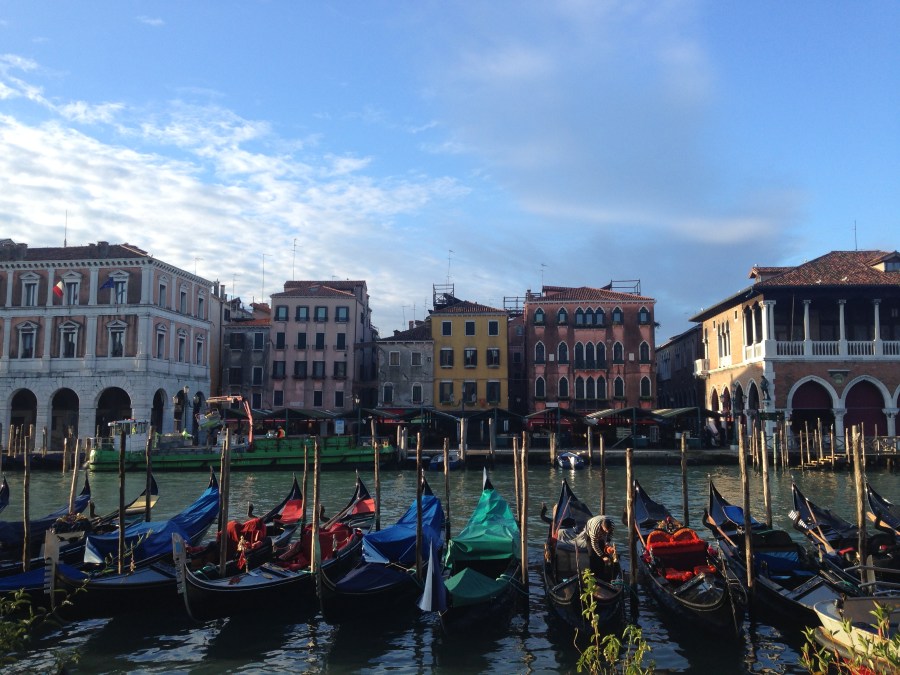
The fish market on the other side of the Grand Canal

9. You cry (and ugly cry) in front of each other

Italy—NOT OVER—One morning during a recent stay in Venice I was sitting on our private terrace on the Grand Canal, listening to Kiri te Kanawa singing “Quando m’en vo” from Puccini’s La bohème, and everything around me—the gondoliers, the sea gulls, the fish market on the other side of the Canal, the Canal itself even—moved in perfect harmony with that soletta. The beauty of it all overwhelmed me, but no one saw my tears because I was wearing my Italian luxury Persol aviator sunglasses at the time.

France—OVER—Like that time when I broke down in tears in a phone booth in Paris’s Place de Clichy while telling my mother the apartment I had rented sight unseen turned out to be a disaster. It was a cold night in early February. And it was raining.

10. You know your love is real

Italy—NOT OVER—But I just know it is real!

France—OVER—It’s real, alright.

Now that I’ve gotten that off my chest, I’m leaving France for now and rushing into the arms of Italy and his white wines.

A Wine Even a Xenophobe Would Love

In honor of  French President Emmanuel Macron’s recent state visit to the United States, and since the U.S. Supreme Court is hearing oral arguments in Trump v. Hawaii, I’m re-posting my review of Pouilly Fumé in its brief entirety, reformatted and out of order. [Originally posted on FB on January 26, 2018.]

27067669_10215423541771934_6334081758778759450_nIf I have anything at all in common with the current Administration, it’s an unabashed preference for European whites, French ones in particular.

With that in mind, let’s scooch to the left of Burgundy and down to the lovely Loire Valley and the village of …wait for it… Pouilly-sur-Loire. Phonetically translated, Pooey-on-the-Loire sounds more alarming than refreshing, but the Pouilly Fumé (“smoked pooey,” also alarming) produced here represents quite nicely what can be achieved with the sauvignon blanc varietal. Pouilly Fumé is 100 percent SB.

If it weren’t so funny sounding, the French would say it has a “chuchotement de pamplemousse” (translated, a whisper of grapefruit)

A Table Overflowing with Condrieu and Buffoonery is No Place for a Debbie Downer

If I could have dinner and a bottle of fragrant Condrieu with anyone in the world, dead or alive, it would be with the late Luis van Rooten, alive.

He was not only one of the cleverest writers of the 20th century (more about that below) but also – among so many other things – an actor, an architect (he designed three post offices in Cleveland, Ohio), a military radio announcer during World War II, and a gifted homophonic translator.

Talk about versatile. How many people can say that they played the roles of the Nazi SS leader, Heinrich Himmler, twice AND the King and the Grand Duke in Walt Disney’s 1950 animated film, Cinderella?

He also had a delicious sense of humor.

Van Rooten was born in Mexico City,  where his French-Mexican father worked as a translator and liaison for the American Embassy until he was assassinated on a train en route to California. His Belgian grandmother worked as a sort of lady’s maid for the wife of the Mexican president. During the Mexican Revolution, she fled north with little Luis, at the border claiming him as her son because he had no papers, which resulted in the outrageous elongation of his name to Luis Ricardo Carlos Fernand d’Antin y Zuloaga van Rooten.

After a brief time with relatives among their orange groves in Pasadena, he headed off to boarding school in western Pennsylvania, that All-American crossroads of hope and despair south of the shallowest Great Lake where the western Northeast meets the eastern Midwest.

[Comment: You can bet that the other kids at school taunted him with names like “van Rooten tootin'” and “tootin’ van Rooten.” It’s not easy growing up in rough and tumble western Pennsylvania with a name that rhymes with a word that describes “droppin’ a rose,” as they say in polite society and in some diplomatic circles. End Comment.]

Of his three books, I am most familiar currently with his 1967 classic, Mots d’Heures: Gousses, Rames (roughly translated as Words of the Hours: Roots and Branches), a compendium of 40 seemingly obscure French poems he had supposedly inherited in manuscript form from a deceased relative. I like verse no. 19 because it speaks to our shared interest (his presumed, mine avowed) in floriculture, roses in particular:

Raseuse arrête, valet de Tsar bat loups
Joues gare et suite, un sot voyou.

[Comment: Van Rooten’s other books are The Floriculturalist’s Vade Mecum of Exotic and Recondite Plants, Shrubs and Grasses, and One Malignant Parasite, and Van Rooten’s Book of Improbable Saints, an irreverent hagiography of lesser-known Christian saints, such as St. Dichotomy and St. Pickip the Czech.  End Comment.]

Verse no. 19 from Mots d’Heures is said to be an account of an incident at the Russian Imperial court where a valet beats away wolves as the lady barber (the “raseuse”) is told to stop shaving the Tsar, a delicate operation considering the Imperial family’s history of hemophilia.

An accomplished voice-over artist and announcer, van Rooten never intended for his target audience – francophones and francophiles mainly – to probe this collection of poems too deeply for meaning. Instead, he meant for them simply to listen to the sounds as they are recited aloud. Take “raseuse,” for instance. It’s a homophonic approximation in  French of the English word, “roses.”

[Comment: Can I stop dropping hints now? End Comment.]

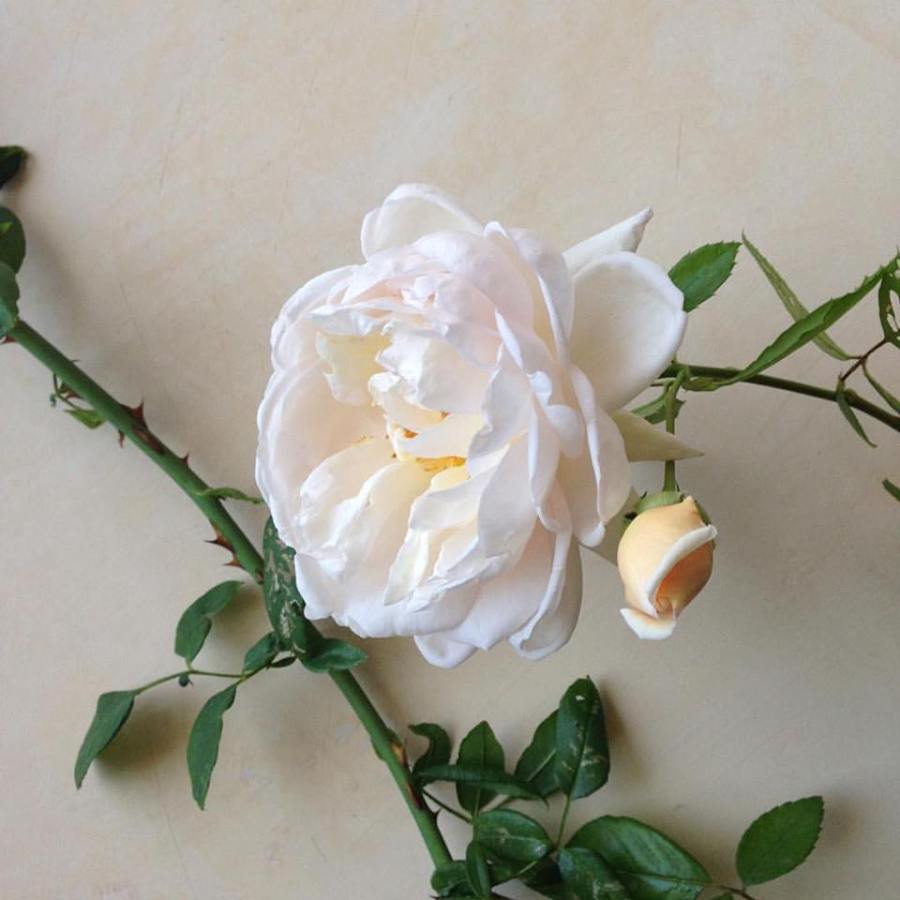
I love roses in any language. During the nice seasons, I struggle daily to defend them against aphids, spider mites, black spot, powdery mildew, caterpillars, over-watering, under-watering, and others’ overzealous pruning. I also proudly display them as the wallpaper on my mobile phone and in numerous posts on Facebook and Instagram.

As a matter of fact, I recently bought this painting of roses from BRUSH Studio on Etsy:

29342652_359571731189503_6834895119586426880_n

I call this one the Valmarana rose because I came across it last fall while trespassing in the courtyard of the privately owned Palazzo Valmarana in Vicenza, Italy:

23031528_10214716481815877_6639512437339231060_n
This image of the Valmarana rose is the current wallpaper on my mobile phone.

From about March to May each year, we toil to make this dazzle happen for two weeks and then toil from May to March to keep the bushes alive for the next round of toiling and dazzling:

990006_10201255595822140_1605462782_o
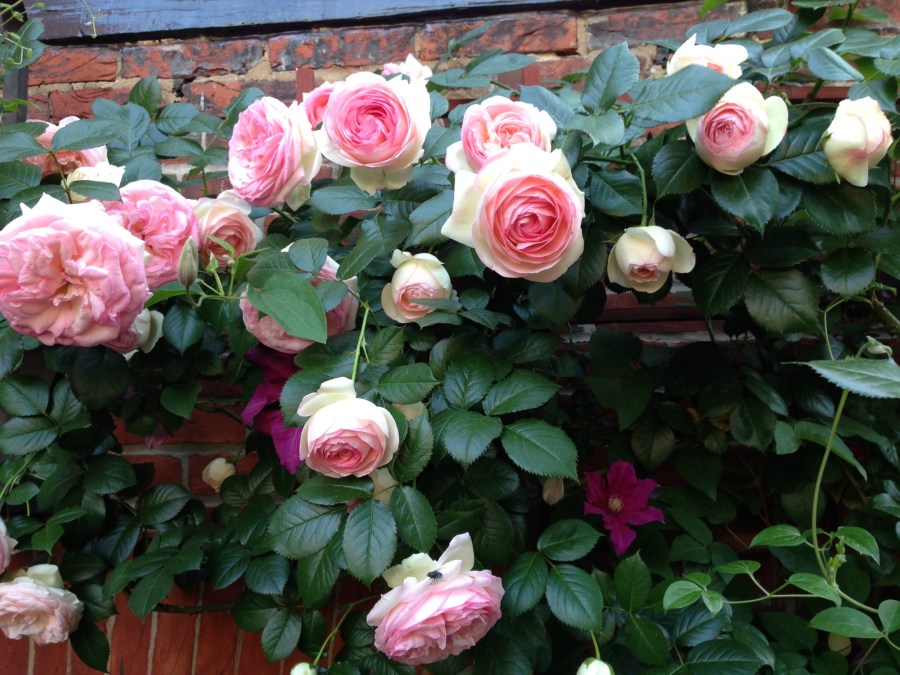
These Pierre de Ronsard climbing roses, also known as Eden Climbers, grace our kitchen garden, tax our patience, and sap our resources throughout the year.

I blame my anthophilia (love of flowers, not a hereditary blood disease) on my maternal grandfather, who for decades toiled in his garden of more than 50 rose bushes. Here’s a bird’s-eye view of a part of it, along with a photo of my grandfather taking a break from his rose-toiling:

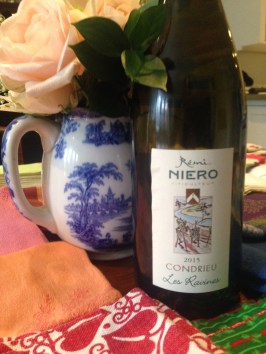
About the Condrieu, the AOC-certified French white wine from the west bank of the Rhône: It’s pricey, produced in small quantities, and made from 100 percent viognier grapes.

IMG_0665

The full-bodied wines made from viognier can go in a number of unconventional flavor directions, from crushed gravel and beeswax to honeysuckle and potpourri according to Wine Folly. This Niero Condrieu surprised and delighted with its lovely floral aroma and hint of rose water. It’s like two weeks of May in a bottle, complete with blossoms from the Pierre de Ronsard climbers pictured above that frame the French-looking casement window and doors of our kitchen and cause us anguish year round.

Pierre de Ronsard was a 16th-century French aristocrat and prolific poet whose dream of becoming a diplomat was shattered by the onset of an incurable deafness. [Comment: As if that would have mattered. Most diplomats can hear only the sound of their own voice anyway. End Comment.] His “Ode à Cassandre,” a lyrical poem about a girl and a rose written in 1545 to the daughter of the wealthy Florentine banker, Bernardo Salviati, is the main reason the climbing rose, created in France in 1985, bears his name.

In brief, the ode is a gentle reminder that physical beauty, like a rose, eventually fades, so make the most of it while you’re young because it won’t last forever:

Mignonne, allons voir si la rose
Qui ce matin avoit déclose
Sa robe de pourpre au Soleil,
A point perdu cette vesprée
Les plis de sa robe pourprée,
Et son teint au vôtre pareil.

Las ! voyez comme en peu d’espace,
Mignonne, elle a dessus la place
Las ! las ses beautés laissé choir !
Ô vraiment marâtre Nature,
Puis qu’une telle fleur ne dure
Que du matin jusques au soir !

Donc, si vous me croyez, mignonne,
Tandis que votre âge fleuronne
En sa plus verte nouveauté,
Cueillez, cueillez vôtre jeunesse :
Comme à cette fleur la vieillesse
Fera ternir votre beauté.

[Sweetheart, let’s see if the rose
That this morning had open
Her crimson dress to the Sun,
This evening hasn’t lost
The folds of her crimson dress,
And her complexion similar to yours.

Ah! See how in such short space
My sweetheart, she has on this very spot
All her beauties lost!
O, so un-motherly Nature,
Since such a beautiful flower
Only lasts from dawn to dusk!

So if you believe me, my sweetheart,
While time still flowers for you,
In its freshest novelty,
Do take advantage of your youthful bloom:
As it did to this flower, the doom
Of age will blight your beauty.]

The doom of age? Think about that for a moment.

Methinks Ronsard dropped a rose. Right at Cassandra Salviati’s feet, no less.

Okay, done.

Needless to say, despite the obvious shared interests in roses, diplomacy, and even poetry, I wouldn’t dream of resurrecting or reciting Ronsard over dinner and a bottle of Condrieu with the late, great, tootin’ Luis van Rooten. A sumptuous table graced with rose bouquets and overflowing with non-stop buffoonery and groan-inducing puns is no place for a Debbie Downer like Ronsard, alive or dead, even if he is the “Prince of Poets.”

Nota bene: After graduating from the Kiski School in Saltsburg, Pennsylvania, van Rooten attended the University of Pennsylvania, where he earned a degree in architecture in 1929. He turned from architecture to acting during the Great Depression and built a long and successful career on stage and in radio and film. Not bad for a Mexican kid smuggled into the United States at the age of seven. Wouldn’t you agree?

I’ll Have the Stripped Bass and a Glass of Saint-Véran

I love a good mispelling. Typos, to, which explains my affection for Saint-Véran.

That cheap pie you just ate? It wasn’t real pumpkin:

1915405_1266568834531_1545993_n

Food allergies? Avoid the knitted hats and scarves at the company holiday bazaar. They’ve been in contact with nuts:

1915404_1284085992449_4708078_n

Looking for Dad? Check the adults-only aisle at the home improvement store:

215341_1031466837128_982_n

My first memory of misspelling is from spelling class in the fifth grade. I misspelled “stripped.” I had left off the second P and spelled “striped” instead.

I’ll never do THAT again.

The substitute teacher on that day read me the riot act. How could I, she wondered,  have possibly confused “stripped” and “striped,” knowing that Jesus had been two-p stripped of his garments just before his crucifixion? It was a Catholic school, the Tenth Station of the Cross, and I was an altar boy for Christ’s sake, for Christ’s sake.

She might have also been the one who told us fifth graders that we wouldn’t go to Hell if we died wearing a devotional scapular. We never got practical tips like that on how to avert eternal damnation from our usual teachers. Or from the nuns. Or the priests. They never threw themselves into their teaching like the substitutes. Probably because they didn’t have to.

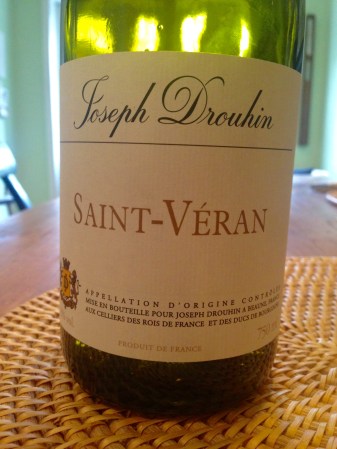
FullSizeRenderAbout Saint-Véran, the delightful, unoaked AOC white wine from southern Burgundy: The real village of Saint-Véran is high up in the French Alps, on the border with Italy. It is nowhere near the vineyards southwest of Mâcon where they grow the Chardonnay grapes to make the wine.
In non-technical wine geographical terms, Saint-Véran is the bread in the Pouilly-Fuissé sandwich. The SV vineyards border the PF ones on the north and the south.

The town near the vineyards is Saint-Vérand. Apparently, the scribe who inscribed the wine on France’s AOC list of wine heritage in the early 1970s had inadvertently left off the final letter D, transforming Saint-Vérand into Saint-Véran. Some say that the misspelling was intentional and that Saint-Véran was the village’s ancient name, but that explanation doesn’t square with the Institut national de l’origine et de la qualité‘s strict AOC nomenclature.

In either case, the misspelling is a memorable talking point, especially for the growers and knowers saddled with the task of distinguishing Saint-Véran from the more than 25 AOC-certified white wines, mostly chardonnays, produced in Burgundy.

I don’t know how to end this one, so I’ll conclude by saying that the Drouhin Saint-Véran is available at Spirits of Mount Vernon in Baltimore. Don’t worry about the screwtop. CLINK!

Aligoté, Burgundy’s Cinderella Grape

When the opportunity finally arrives for me to direct the first all-grape cast in a production of the French composer Jules Massenet‘s 1899 opera, Cendrillon, based on the French author Charles Perrault‘s 1698 folk tale of the same name, you can count on me to hand the starring role of Cinderella to Burgundy’s under-appreciated aligoté grape. And it won’t be because the white wine made from it (commonly called Bourgogne Aligoté) has the taste of rags and the texture of cinders (it does not) or the texture of rags and the taste of cinders (it does not).

The Cinderella leitmotif of neglect and oppression followed by recognition and reward is as old as the hills, appearing in Asian rags-to-riches tales from the 9th century and in ancient Greek ones from as far back as the 1st century BC, apparently. My bathroom copy of Buddhism for Sheep includes a number of inspirational — and, I’m sure, ancient — proto-Cinderella nuggets, such as “There are two ways of looking — a right way and a wrong way,”  “Those who act well and have good karma will be reborn into happiness,” and my personal favorite, “The stinking pen and the fragrant rose are two aspects of the same existence.”

In his version of the Cinderella tale, Perrault introduced the popular fairy godmother, the pumpkin carriage, and the essential glass slippers that we all know and love today. In its blockbuster 1950 animated film, Walt Disney Productions added many of the talking animals, including the mice sidekicks, Jaq (aka Jacques) and Gus (aka Octavius), which we also know and love. In their 1971 musical story book and record about Cinderella, the Peter Pan Players and Orchestra introduced memorable ditties like “Work, Work, Work” and “Nobody Fits the Shoe,” which I know and love because we had that musical story book in our house when I was growing up.

“Work, Work, Work” resonated with me especially because it summarizes my attitude towards household chores and work in general, both at the age of five and today:

Work, work, work!
I try not to complain.
Washing, mending, stretching, bending.
Everyday’s the same.

Work, work, work!
I try not to complain.
Sweeping, dusting, cooking, SCRUUUUB-ing…

Disney has also put out a number of  Cinderella audio-enhanced books over the years, including one with memorable cues from Neverland native, Tinker Bell. You knew it was time to turn the page when she rang her little bell like this: “Tinker! Tinker! Tinker!”

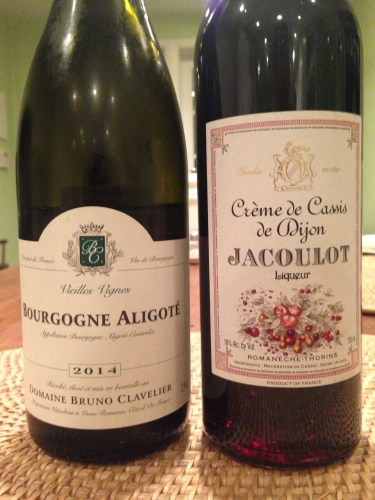
IMG_0623But about Burgundy’s aligoté: Like Cinderella, it’s been maligned, neglected, and overshadowed for years by pinot noir and chardonnay, Burgundy’s two preferred grapes (and the leading contenders for the roles of Cinderella’s ugly stepsisters in my all-grape production of Massenet’s opera). It’s best known — and typically used — as the base for the cocktail, Kir, a concoction of it and crème de cassis (blackcurrant liqueur) named after Félix Kir, a former mayor of the Burgundian city of Dijon and member of the French Resistance during World War II.
One of the unintended consequences of tarting up aligoté beyond recognition with blackcurrant or another fruit-based liqueur has been its devaluation as a wine worth drinking on its own. The New York Times wine critic Eric Asimov is one of a handful of wineknowers who, in Prince Charming fashion, have recently come to aligoté’s rescue. As Asimov points out in this July 2017 review, aligoté goes with just about everything… from, I would add, your best dazzle outfit to those ratty old sweat pants you’ve been holding onto since college. [Comment: You know who you are. End Comment.]

I first met aligoté through Kir (the cocktail, not the mayor) in Paris in the summer of 1987. My fellow American and Swiss stagiaires (trainees) and I were celebrating our recent liberation from an oppressive architectural conservation chantier (work site) at the 14th-century Abbaye Royale du Moncel between the communities of Pontpoint and Pont-Sainte-Maxence in the northern French department of the Oise in Picardy.

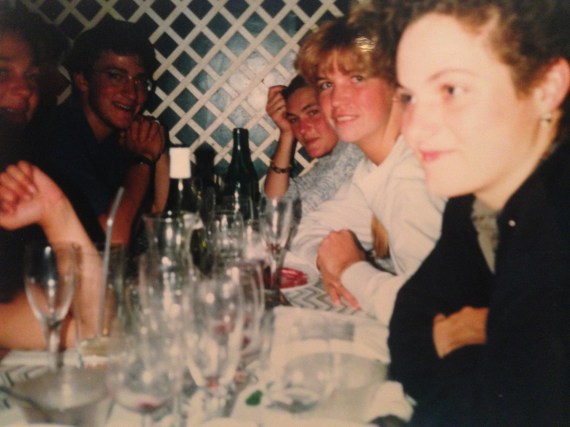
I remember the July 27th liberation celebration at the Restaurant du Théâtre like it was yesterday. [Comment: Having the menu and the bill from that evening more than 30 years ago certainly helps. Remarkably, I had the foresight back then to mark my courses in red ink. End Comment.] I had the mushroom salad with fresh mint, followed by the roasted duck breast with sauteed potatoes and market vegetables. Yummy!

This out-of-focus photograph captures the tenor of that evening and the commanding role Kir and other French beverages played in it:

IMG_0631

For the Dutch and Swiss kids at the Abbaye Royale du Moncel that summer, the chantier was a place for their parents to park them for a couple months while they enjoyed their adult vacations. For the six of us from the United States, it was a unique cultural immersion and a cool thing to add to our skimpy resumes. For the French it was, by and large, a place to dump juvenile delinquents from the public housing projects in the Parisian suburbs temorarily.

We worked our fingers to the bones eight hours a day, six days a week, on various masonry restoration projects at the abbey. I spent a lot of time working on the floor of the abbey’s wine cellar. [Comment: I know! What were the odds of that happening?! End Comment.] Those stone pavers were heavy. I get a twitch in my lower back just thinking about them.

Since we didn’t have any talking animal sidekicks to console us during the darkest hours of our misery, we recited passages from Monty Python and the Holy Grail to mask our mounting physical and emotional pain. Once we realized that our French overlords didn’t quite understand Monty Python one-liners, they became our secret code.

We lived communally in flimsy tents (it rained a lot that summer), had to walk a mile into town to shower, and took turns on KP duty cooking for more than 20 and cleaning up afterwards.

We created lyrics about being on KP and set them to the melody of “Singin’ in the Rain”:

I’m faire-in’ la vaisselle, just faire-in’ la vaisselle.
And after I’m finished, I’ll vider la poubelle.
With a smile on my visage, I’ll éviter la stage.
Just faire-in’, just faire-in’ la vaisselle.

[I’m doin’ the dishes, just doin’ the dishes.
And after I’m finished, I’ll empty the trash can.
With a smile on my face, I’ll escape this traineeship.
Just doin’, just doin’ the dishes.]

Here is a picture of us on KP duty at the abbey. It doesn’t look like anyone was in the mood for singing that day.

IMG_0632

About three quarters of the way through the stage, personal possessions started disappearing from our tents. Money. Watches. Cameras. Portable radios. We knew at that moment that the chantier had turned a corner and that we had to break out of the place. Those of us who still had our watches synchronized them in preparation for an early morning escape on a specified date.

Luckily for us, we, like Cinderella, had our own fairy godmother on the morning of July 27th, 1987. Yvette, an adult volunteer from the village, showed up with a getaway car (it was a white station wagon, not a pumpkin carriage) and drove us to the station so that we could catch the train to Paris. Once in the City of Light, we checked into a hostel on Rue Pelican. Then, we headed out for a celebratory feast and what would turn out to be our first Kir made with aligoté.

Undertaker, Pour Me a Graves!

I went out to dinner recently with a group of associates and one of them ordered a “grave.” I was feeling more hopeful about the future that evening, so I ordered a glass of rosé.
Correctly pronounced, Graves is GRAWve. You can listen to a French pronunciation of it in this short audiovisual presentation, one of 241 French wine names recorded on the Learn French from Vincent channel on YouTube.

Under ordinary circumstances, I wouldn’t poke fun at someone’s mispronunciation of a French word. [Comment: What am I saying?! Of course I would! Ha ha ha! End Comment.] But these aren’t ordinary circumstances. I’ve been there. I’ve been locked in an epic tug of war with the French and their language for most of my adult life.

During my first visit to the Musée d’Orsay in Paris (I was 19 years old at the time), I had joked with my companions that a gallery of prints by the French painter, Odilon Redon, had been “redone.” Immediately, a French woman appeared from out of nowhere and corrected me.

“Non,” she said. “Eat’s Ray-DAWN.”

And then she disappeared.

The Orsay-Redon Incident was in August 1987, but by that time the struggle was already a month underway. “I have had it! Whenever I go to speak French I goof up… If I could leave I would, but I don’t want to carry my bags, and I’ve spent all my money for this.” I wrote that in my journal on July 17, 1987–four days into my first trip ever to France and a month before Orsay.

Out of laziness I suppose (I didn’t want to carry my bags???), I stuck it out through the rest of the summer as planned. Though I vividly remember Orsay-Redon down to the color of the gallery walls, after a month I had already gotten enough black eyes for intentionally and unintentionally mispronouncing French words and phrases that I shrugged it off, resolved to do better next time, and moved on to the next confrontation.

For some people, the fear of mispronouncing French words and wines, combined with a lack of familiarity with French geography, might be a barrier to trying them. The French tradition of naming and certifying wines by French place name as opposed to grape (Vouvray as opposed to Chenin Blanc, for example) made sense when the market for French wine was mostly domestic. It’s a bit more complicated now that the biggest markets for French wines are outside of France, which is one of the reasons you see the names of grapes appearing more regularly on French wine labels. A French Chardonnay is more accessible to non-francophones in China and the United States than a Mâcon-Villages, even though they’re the same thing.

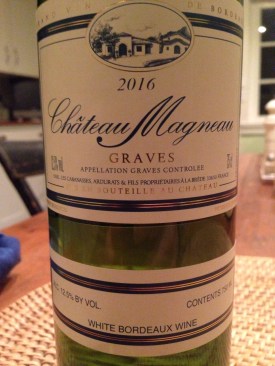
About Graves, the AOC certified white wine from Bordeaux, where the Garonne River meets the Atlantic: It’s a bit limestoney, but it’s what you’d expect from a wine produced in a sub-region that likes to tout its gravely soil (it’s part of the terroir). This Château Magneau Graves is made from a blend of Sauvignon Blanc, Sémillon, and Muscadelle grapes native to the west of France. Château Magneau’s old-school wine label doesn’t list them: We’re just supposed to know that.

If you’re into caressing stone columns like I am (I picked up that bad habit from an American I had met in a medieval cloister somewhere in France), then you’ll definitely dig a Graves.

NB: And in case you were wondering, I do know that Pouilly is properly pronounced “Poo-yee.” I left off the letter Y in previous posts for comedic effect!

Princess Wine with African Sauce

The idea of a wine blend baffles me (as in, why do it?), considering the wide variety of grapes available and the different methods for producing distinctive tasting wines from the same kinds of grapes, but the practice of mixing and fermenting juices from different grapes goes back centuries, apparently.

One theory is that vintners reduced risk by planting different varietals so that if one didn’t do well one season, the others could make up for it. They’d then mix them together, pray to Saint Martin, and hope for the best. Foresters and landscapers follow a similar logic with trees, inter-planting different species so that a single pest or fungus doesn’t wipe them all out. I don’t think Saint Martin could help them since his holy portfolio doesn’t include trees, forests, or landscaping, so they probably pray to a different saint.

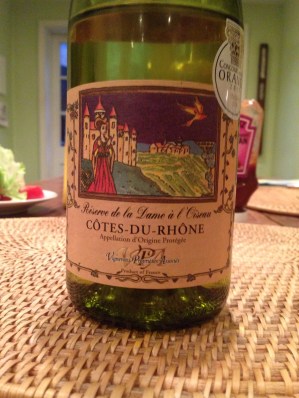
Which brings me to the Vignerons Propriétés Associés, an association of grape growers and wine makers along the Rhone River (and elsewhere in France) which has pulled its resources and vines to produce award-winning blends.

At home we call the association’s reds and whites “Princess Wine” because the woman on the label looks like a princess, and princess is easier to say than dame a l’oiseau, though we could call it bird lady wine. [Comment: I didn’t coin the name “princess wine.” End Comment.]

The wine is a motley combination of Grenache Blanc, Viognier, Clairette Blanche, and Roussanne grapes. I don’t know what some of these grapes taste like on their own, but together they make a refreshingly light wine that goes well with hamburgers.

And African Sauce.

Most likely a figment of the German imagination (like Valhalla), African Sauce is itself a motley combination of mint, honey, tomato, onions, dates, garlic, and other herbs and spices. [Comment: The Heinz Germany website URL says Moroccan. African Sauce is not available in the USA as far as I know. End Comment.] I don’t know if it has any connection at all to Africa or African cuisine, which is as diverse as the continent itself, but it works as a blend.

If you’re a purist, you probably won’t like either. But if you’re eclectic in your tastes, then you just might enjoy both.

Cat and Wine Pairings

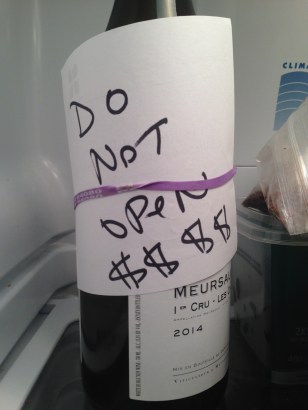
UPDATE February 13, 2018: Most of my taste buds have returned, so I opened the Meursault. Itza very nice. Dry and cold like me in middle age. But really, it’s cold because the thermostat in our refrigerator is going and chilling everything to a frosty 30 degrees. The wine warms up nicely on the counter. The frozen produce not s’much.

Meursault and Montrachet are among the best white wines produced in France, the latter among the best in the world. They are also great names for cats.

If this Scottish Fold were mine, I’d name him Meursault (mer-SO: “mer” as in “mermaid” and “so” as in “so cute!”):

Scottish Fold Looking.jpg

I’d want him to squint most of the time like I do, though, because the breed can look creepy with the eyes wide open.

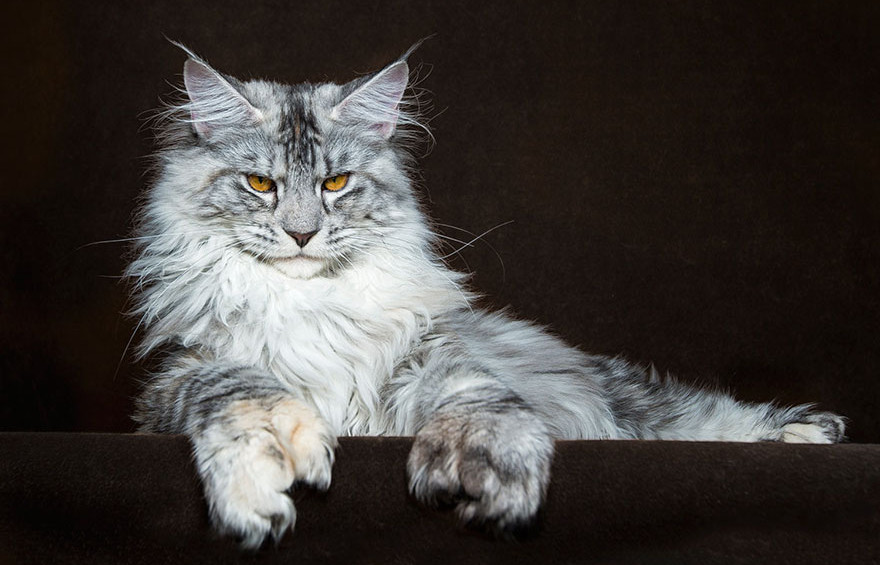
This Maine Coon looks to me like a Montrachet (mon-tra-SHAY):

maine-coon.jpg

It’s one of the largest domesticated cats around, and proud owners like posting photos of their giant Maine Coons next to measuring tapes and other objects for scale. It’s the official state cat of Maine, by the way, and native to that part of North America.

Omar, a Maine Coon in Melbourne, Australia, is reportedly the world’s largest domestic cat right now. Here he is with his human and a measuring tape:

nintchdbpict000324349113-e1495026506416

Both Meursault and Montrachet (the wines, not the cats) are AOC certified but rise above and beyond most other AOC wines because of the Chardonnay vineyards near the Burgundian city of Beaune where they are produced. Most of the vintners and vineyards growing Chardonnay for Meursault are certified Premier Cru. Most, if not all, growing grapes for the more exclusive and superlative (like Omar) Montrachet are Grand Cru. In Burgundy at least, these certifications indicate that the local environment (the terroir) is optimal for consistently producing the highest quality Chardonnay grapes and AOC wines.

IMG_0529.JPGSince both wines are pricey, I went with the cheaper (and cuddlier) Meursault so that I won’t have to eat ground glass patties between slices of cardboard this weekend. I’ve also marked the bottle in the refrigerator so that it doesn’t inadvertently wind up in a casserole or a sauce, which has happened to fine wines here in the past.
I haven’t yet tried this Meursault because I have the flu, but I imagine it goes well with solid food, especially fancy feasts prepared for special occasions. If for some reason you think your dinner host won’t easily recognize your good taste, leave the price tag on the bottle. [Comment: Don’t do that. End Comment.]

Got a cat and wine pairing of your own to share? Send them to me and I will feature them here!

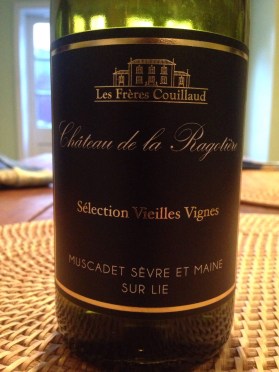
I’m having the Muscadet

Whenever I think of the mouth of the Loire River in western France, my mind goes immediately to the Cloaca Maxima, the great sewer of Ancient Rome, 1,700 kilometers away in Italy. In its time more than 2,000 years ago, the Cloaca Maxima drained tons of effluvia from the marshes and streets of the Eternal City and into the Tiber River. It still functions, and every so often people camp out there [Comment: If interested in seeing it in person, go during the day. End Comment.]

France’s longest river has to empty itself out into the ocean somewhere, and lucky for us the forces of commerce, politics, history, and wine geography aligned in such a way over the centuries that the mouth of the Loire today is the leading producer of Muscadet, the immensely popular dry white AOC certified wine made from the obscure melon de Bourgogne (aka “melon”) grape.

If I were a grape and someone called me a melon, I’d be pretty upset.

In the French-speaking world, “tête de melon” (translated, melon head) is an insult. “J’ai le melon” means that I have a swelled head or a big ego.

But not at the mouth of the Loire.

In Nantes, the major port in the region, it could mean, “I’m having the Muscadet.”

During the 17th century, Dutch merchants loved the Muscadet wine made from “melon” grapes so much that they encouraged their cultivation around Nantes, making it cheaper, quicker, and easier for them to export to the Low Countries, and where they frequently distilled it to make brandy. [Comment: Look at any Dutch genre painting from the period, and you’ll see how much they enjoyed the brandy. End Comment.]

The “Bourgogne” in the name indicates that the varietal is native to Burgundy in eastern France, but you won’t find much of it growing there these days. The “melon” vineyards of Burgundy were reputedly ordered by royal decree to be destroyed in the early 18th century, further concentrating the cultivation of “melon” grapes at the river’s end.

The melon de Bourgogne grape is hardy, thick-skinned apparently (it would have to be, especially on the playground), and can tolerate the coastal climate, which is another reason for its prevalence in the region. It also grows well in Oregon.

Some of the better Muscadets are fermented “sur lie,” meaning that they are left to age on the wine skins for a while before going directly into the bottle, which enhances the texture of the wine and gives it a little fizz.

In Memory of Chard the Guard

Kathie-PhotoAlmost to the day 15 years ago, a coyote fatally attacked Kathie Lee’s beloved Chardonnay on the Gifford family’s suburban Connecticut estate. “Chard the Guard” (the family pet’s pet name, according to the New York Post) was patrolling the estate when the coyote snatched it, probably from a snow drift considering the time of year.
I had misremembered Kathie Lee’s dogs Chablis and Chardonnay as Labrador or Golden Retrievers because of the colors of those breeds’ coats. In reality, they were lily white Bichon Frises. [Comment: Why would someone name white dogs after something yellow and not after something white like a marshmallow or snowball? End Comment.]

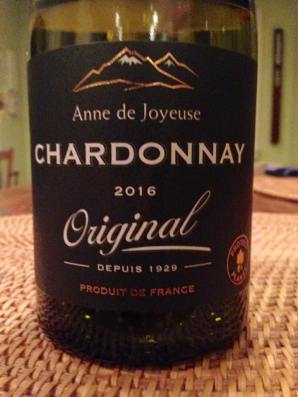
27073279_10215463614133718_188022670492107424_nI’m taking a break from the Loire Valley to pay tribute to the late great Chard the Guard with another Chardonnay. Though not distinguished with the coveted AOC certification, this one is a veritable “Vay Day Pay,” a lower-than-AOC vin de pays country wine from the South of France. It’s 100 percent Chardonnay grape, but half of it’s been aged in oak, so I’m drinking from the left side of the glass only. More important, the octogenarian wine cooperative, Anne de Joyeuse has “joyful” in its name, so I can end this post on a cheerful note.