
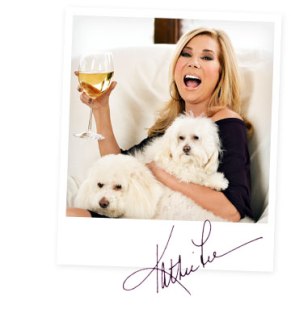
 Almost to the day 15 years ago, a coyote fatally attacked Kathie Lee’s beloved Chardonnay on the Gifford family’s suburban Connecticut estate. “Chard the Guard” (the family pet’s pet name, according to the New York Post) was patrolling the estate when the coyote snatched it, probably from a snow drift considering the time of year.
I had misremembered Kathie Lee’s dogs Chablis and Chardonnay as Labrador or Golden Retrievers because of the colors of those breeds’ coats. In reality, they were lily white Bichon Frises. [Comment: Why would someone name white dogs after something yellow and not after something white like a marshmallow or snowball? End Comment.]
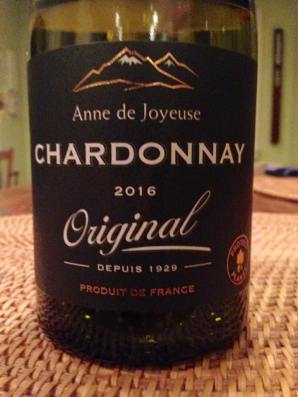 I’m taking a break from the Loire Valley to pay tribute to the late great Chard the Guard with another Chardonnay. Though not distinguished with the coveted AOC certification, this one is a veritable “Vay Day Pay,” a lower-than-AOC vin de pays country wine from the South of France. It’s 100 percent Chardonnay grape, but half of it’s been aged in oak, so I’m drinking from the left side of the glass only. More important, the octogenarian wine cooperative, Anne de Joyeuse has “joyful” in its name, so I can end this post on a cheerful note.
 To achieve the village’s coveted eponymous
  I was talking about the wine